
ISO Certification Process
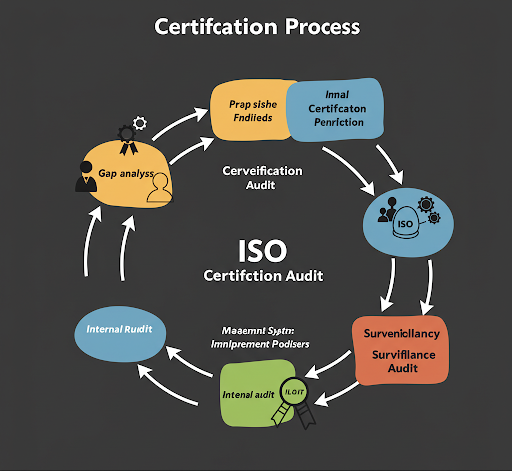
To get ISO certified, here’s a general overview of the process:
1. Understand ISO Standards:
- Familiarize yourself with the different ISO standards to determine which one is relevant to your organization’s needs (e.g., ISO 9001 for quality management, ISO 14001 for environmental management, ISO 27001 for information security).
2. Preparation and Gap Analysis:
- Choose the type of ISO certification you need.
- Conduct a gap analysis: Evaluate your current processes and systems against the requirements of the chosen ISO standard to identify areas that need improvement.
- Develop necessary documentation: This includes quality manuals, policies, procedures, work instructions, and records as required by the specific ISO standard.
3. Implementation:
- Create an action plan to address the gaps identified.
- Implement the required changes to your processes and systems.
- Train your employees on the new procedures and the requirements of the ISO standard.
4. Internal Audit:
- Conduct internal audits to ensure that your implemented system is working effectively and conforms to the ISO standard.
- Identify any non-conformities and take corrective actions.
5. Selecting a Certification Body:
- Choose an accredited ISO certification body (registrar). Ensure they are recognized and credible. Consider factors like their reputation, experience, and accreditation.
- Create an application/contract with the chosen registrar, outlining the scope of certification, timelines, and costs.
6. External Audit:
- Stage 1 Audit (Documentation Review): The ISO auditor will review your quality manuals and documentation to check for readiness for the next stage.
- Stage 2 Audit (Main Audit/On-site Inspection): The auditors will visit your organization to verify that your quality management system meets the requirements of the ISO standard and is effectively implemented. They will conduct interviews and review records.
7. Addressing Non-conformities:
- If the audit identifies any non-conformities, you will need to develop and implement corrective actions within a specified timeframe. A follow-up audit might be necessary to verify these actions.
8. Certification:
- If the audit is successful and all non-conformities are addressed, the certification body will issue your ISO certificate.
- The certification is typically valid for three years.
9. Surveillance Audits:
- To maintain your certification, surveillance audits are conducted periodically (usually annually) by the certification body to ensure ongoing compliance with the ISO standard.
10. Recertification:
- Before the end of the three-year certification cycle, you will need to undergo a recertification audit to renew your ISO certification.
Cost and Timeframe:
- Cost: The cost of ISO certification varies significantly based on factors such as the size of your organization, the complexity of your processes, the specific ISO standard, and the certification body you choose. It can range from a few thousand to lakhs of Indian Rupees. Be aware of both IAF (International Accreditation Forum) and non-IAF accredited certifications, as their costs can differ.
- Timeframe: The time it takes to achieve ISO certification also varies depending on the organization’s size and preparedness. Small organizations might take 30-60 Days, medium-sized ones 60-90 Days, and larger ones 90-120 Days or longer.
Benefits of ISO Certification:
- Improved customer satisfaction and loyalty
- Increased efficiency and productivity
- Better product and service quality
- Enhanced credibility and reputation
- Improved risk management
- Increased market access and competitive advantage
- Greater employee engagement and morale
- Facilitates continuous improvement
- Can lead to lower costs (e.g., reduced waste, insurance premiums)
- Regulatory compliance
- Global recognition
Remember that ISO itself does not provide certification; it is done by external certification bodies. Accreditation bodies accredit these certification bodies to ensure their competence and impartiality.